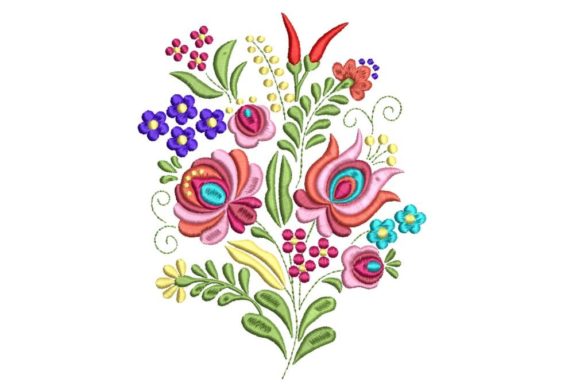
Review: Hungarian Kalocsai Colorful Motif for Craft Fairs
As an embroidery designer who has spent countless weekends behind a booth table, I know that not every machine embroidery design is created equal when it comes to retail success. Some designs look beautiful on a screen but fall flat in person. Others are so dense they break needles and frustrate customers with long production times. Today, I am reviewing the Hungarian Kalocsai Colorful Motif, a design rooted in traditional folk art, to see if it truly earns its place in a serious crafter’s library.
The initial impression of this Hungarian Kalocsai Colorful Motif is one of vibrant energy. It does not whisper; it sings. The description promises "stunningly beautiful" traditional flowers, and visually, it delivers a bold, festive aesthetic. This is not a minimal or modern piece. It is rich, decorative, and deeply rooted in heritage. For a craft fair seller, this is a double-edged sword. It will catch the eye from across the aisle, but it requires the right product canvas to shine without looking cluttered.
Why This Design Works for Handmade Markets
When I evaluate a new digital embroidery file, I ask myself: Does this tell a story? The Kalocsai style is famous for its intricate floral patterns and bright color palettes. This specific motif fits perfectly into the current trend of cottagecore and heritage-inspired home goods. It feels premium because it looks complex, even if the digitizing is optimized for efficiency.
For Etsy sellers and boutique makers, this design offers immediate brand differentiation. In a sea of generic monograms and simple geometric shapes, a colorful floral bouquet stands out. It suggests effort, artistry, and cultural appreciation. When displayed as a craft fair product, it invites customers to touch the texture and admire the thread work. It transforms a basic item into a handmade product with perceived higher value.
Best Products for Maximum Impact
Not every item benefits from such a detailed floral arrangement. Based on my experience with similar Bouquets and floral Embroidery, here is where this motif performs best:
- Tote Bag Design: A large canvas tote provides the perfect neutral background. The vibrant colors of the Kalocsai motif pop against natural cotton or linen, making it an ideal tote bag design for farmers' market shoppers.
- Apron Embroidery: Placing this motif on the bib of a kitchen apron creates a focal point that is both functional and decorative. It appeals to cooks who love adding personality to their workspace.
- Tea Towel Embroidery: This is a classic choice. However, caution is needed regarding fabric texture. A smooth flour sack towel works better than a thick, waffle-weave towel which might distort the fine details of the petals.
- Embroidered Patch: If the design is scaled correctly, it makes a stunning iron-on or sew-on patch. This allows customers to customize their own jackets or bags, expanding your market reach.
- Pillow Covers: As mentioned in the product description, pillows are a prime candidate. A single large motif centered on a square cushion cover creates a high-end look that sells well at holiday markets.
Production Realities and Technical Notes
Before you commit to batch production, we must discuss the practical side of running this commercial embroidery file. The beauty of Kalocsai art lies in its density and color variation. This means you need to be strategic about your setup.
Stitch Density is a critical factor. Traditional folk motifs often have overlapping petals and leaves. If the digitizer has not optimized the underlay or pull compensation, you may experience puckering, especially on lighter fabrics like scarves or dresses. Always test the design on scrap fabric identical to your final product. Check for gaps between color blocks and ensure the thread colors provide enough contrast to define each flower.
Hoop Size matters immensely here. This is likely not a small accent design. It probably requires a 5x7 or larger hoop to maintain clarity. If you attempt to shrink it too much for a small pocket or cap, the tiny details of the flowers will merge into a blob of thread. Conversely, if you enlarge it too much without adjusting density, it may become stiff and heavy.
Consider the stabilizer carefully. For items like towels or textured fabrics, a cut-away stabilizer is often safer than tear-away to prevent distortion over time. For caps, the curved surface presents a challenge. Ensure the design is centered and that the stitch direction follows the curve of the hat to avoid wrapping issues.
Selling Strategy and Visual Appeal
How do you sell this? The key is context. Do not just hang a stitched square on a wall. Show the finished product in use. Photograph the tea towel embroidery hanging in a sunny kitchen. Stage the tote bag with fresh flowers inside. These printable mockup styles or real-life photos help buyers visualize the item in their own homes.
This design excels as a small shop product because it feels exclusive. Mass-produced items rarely capture the nuance of traditional folk art. By offering this, you are selling a piece of culture and craftsmanship. Use terms like "heritage-inspired," "hand-finished quality," and "vibrant folk art" in your listings to attract the right audience.
Be mindful of design assets and licensing. The product description mentions it is a machine embroidery design, but always confirm the commercial license terms before selling finished goods. Ensure you are compliant with the creator's rules regarding mass production versus handmade limits.
Final Verdict for Crafters
The Hungarian Kalocsai Colorful Motif is a strong contender for your next collection. It is bold, culturally rich, and visually striking. It works best on medium-to-large surfaces where the intricate flower details can breathe. Avoid using it on dark fabrics unless you are confident in your thread contrast choices, as the subtle shading may get lost.
For the Etsy seller or weekend warrior, this design offers a chance to elevate standard items like pillowcases and aprons into statement pieces. Just remember to respect the technical requirements: check your hoop size, mind the stitch density, and choose smooth fabrics to let the colors shine. With proper execution, this motif will not just decorate your products; it will define your brand’s aesthetic for the season.