Little Boss: A Designer’s Review for Business Merch
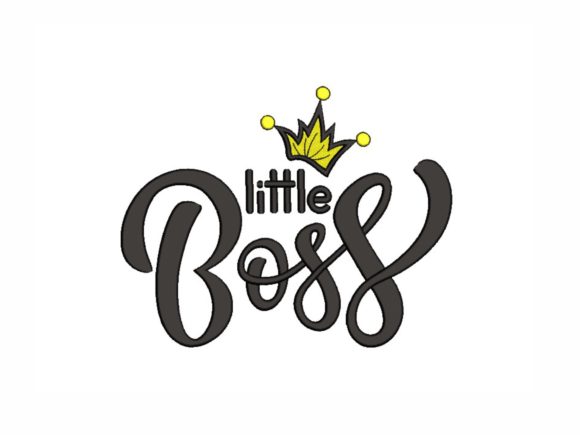
As an embroidery designer who has spent years digitizing files and consulting with small business owners, I approach every new machine embroidery design with a critical eye. It is not just about whether a motif looks cute on a screen; it is about how it performs under the needle, how it translates to a physical product, and ultimately, how it serves the brand identity of the client. Today, I am reviewing Little Boss, a charming design categorized under Babies and Embroidery, to determine its viability beyond the nursery.
At first glance, Little Boss exudes a playful yet authoritative personality. The title suggests a humorous take on hierarchy, which resonates deeply in both family dynamics and modern workplace culture. While the product description highlights its suitability for baby onesies and bibs, my professional assessment looks further. I see potential for this design to become a versatile asset for small business merch, custom apparel, and branded patches. The aesthetic feels handmade and friendly, striking a balance between decorative charm and bold statement-making.
Expanding Beyond Baby Gear
The immediate application for Little Boss is obvious: it is perfect for stitching onto baby onesies, baby bibs, or other similar items. However, restricting this digital embroidery file to infant wear would be a missed opportunity for creative entrepreneurs. Imagine a local boutique coffee shop or a creative studio looking for staff uniforms that break the mold of corporate stiffness. An apron embroidered with Little Boss adds a layer of approachable humor and personality. It signals to customers that the brand is confident, fun, and human.
For Etsy sellers and crafters, this design offers high versatility. It can be scaled down for a subtle chest logo accent on adult t-shirts or hoodies, creating a sense of insider community among staff or loyal customers. When applied to tote bags, the design acts as a conversation starter. A canvas tote featuring this motif transforms a simple grocery carrier into a piece of wearable art that promotes brand recognition. The key is to view the design not just as a decoration, but as a strategic element of your visual consistency.
Performance on Patches and Curved Surfaces
One of the most lucrative avenues for small businesses today is the creation of embroidered patches. These can be sold separately or used to embellish existing inventory. Little Boss has the structural integrity to work well as a patch, provided the digitization supports clean edges. When creating an embroidered patch, you must consider the border. A satin stitch border can frame the design nicely, preventing fraying and giving it a premium, finished look. This makes it ideal for adding to denim jackets, backpacks, or even pet bandanas for pet brands looking to tap into the "fur baby" market.
Cap embroidery presents a unique challenge due to the curved surface and limited space. If you plan to use Little Boss on dad hats or beanies, you must evaluate the width of the design. If the text or graphic elements are too wide, they may distort around the curve of the cap front. I recommend creating a printable mockup to visualize the placement before hooping. For sleeve details on work shirts, the design can serve as a small, impactful badge of honor, reinforcing the idea that everyone in the team is a leader in their own right.
Technical Considerations for Production
Before running a large batch of commercial embroidery projects, there are several technical factors to address. First, check the stitch density. High stitch density can cause puckering, especially on lighter fabrics like those used for baby bibs or thin cotton tees. If the design is dense, you may need to adjust your stabilizer choice. A cut-away stabilizer is often safer for items that will undergo frequent washing, such as uniforms or baby clothes, ensuring the design remains flat and intact over time.
Thread color contrast is another critical element. Little Boss likely relies on specific colors to convey its message. When stitching on dark uniforms or navy tote bags, ensure you have high-contrast thread colors available. If the design includes fine details or tiny lettering, test it at the smallest intended size. Small text can easily become illegible if the stitches merge together. Always test on real fabric that matches your production material. Fabric texture plays a significant role; a textured towel will absorb stitches differently than a smooth polyester blend.
Additionally, confirm the hoop size required for the design. If you are working with multi-needle machines or smaller home hoops, ensure the design fits within your maximum area without requiring re-hooping, which can lead to alignment issues. Since the provided description does not specify exact stitch counts or file formats, it is imperative to check these details in the download package before committing to production.
Enhancing Brand Identity and Trust
Using a distinct design like Little Boss contributes significantly to brand identity. In a saturated market, handmade products stand out when they carry a unique visual signature. Whether you are a florist adding a branded touch to delivery wraps or a bakery selling merchandise, this design adds value. It shows attention to detail and a willingness to invest in quality design assets. Customers perceive embroidered items as higher value than printed ones, which can justify a higher price point for your finished product.
Moreover, this design fosters buyer engagement. It is shareable content. A customer wearing a shirt with Little Boss is more likely to post a photo on social media, providing organic marketing for your business. It creates an emotional connection, blending humor with craftsmanship. For event merch, such as family reunions or team-building retreats, this design serves as a unifying symbol that is both memorable and meaningful.
Final Designer Notes
- Test in Black and White: Before selecting threads, print or stitch the design in monochrome to check for clarity and spacing issues.
- Verify Licensing: Always confirm commercial licensing terms before using any digital embroidery file for business sales.
- Create Mockups: Use design assets to create realistic previews for client approval or online listings.
- Check Stabilizer: Match your stabilizer to the fabric weight to prevent distortion.
- Inspect Details: Zoom in on the digitized file to ensure there are no unnecessary jumps or loose threads that could affect production speed.
In conclusion, Little Boss is more than just a cute baby design. It is a flexible tool for small business owners looking to inject personality into their branded merchandise. From apron embroidery to custom patches, its potential is vast. By paying attention to technical details like hoop size, thread colors, and fabric texture, you can ensure that every stitch enhances your brand’s professionalism and appeal. Treat this design as a core part of your product lineup, and it will likely become a favorite among your customers.