Camping Tent with Campfire: A Designer’s Review
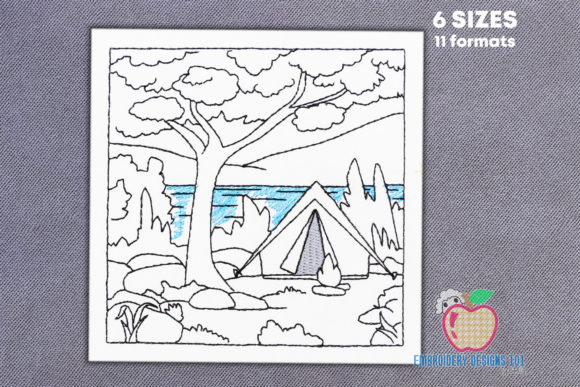
As a designer who spends half my life tweaking stitch paths and the other half testing them on actual fabric, I have learned to look past the glossy preview images. We all know that what looks crisp on a screen can sometimes turn into a tangled mess of thread on a cotton tote. When I first pulled up the Camping Tent with Campfire sketch embroidery design, I was immediately drawn to its simplicity. It does not try to be a photorealistic landscape. Instead, it leans into a charming, hand-drawn aesthetic that feels approachable and warm.
This is not a dense, heavy fill design. The description notes that these are not 100% filled, which is a critical detail for anyone planning to use this in a commercial or high-volume setting. For an experienced eye, this suggests a reliance on running stitches and open spaces rather than thick satin columns. This choice defines the entire personality of the piece. It feels light, airy, and perfectly suited for the current trend of minimalist outdoor decor.
The First Impression: Mood and Visual Personality
The visual layout of the Camping Tent with Campfire creates an instant sense of nostalgia. It captures the essence of camping without the clutter. The tent is pitched, the fire is crackling, and the negative space does the heavy lifting. For embroidery designers and craft business owners, this is valuable because it translates well across various mediums. It does not scream for attention; it invites it.
I imagine this design sitting comfortably on a beige canvas tote bag, stitched in a deep forest green or a muted charcoal. It would also work beautifully as a small chest emblem on a heather grey sweatshirt. The sketch style allows it to blend into the fabric texture rather than sitting on top of it like a plastic patch. This integration is key for creating high-quality handmade products that feel premium rather than mass-produced.
Real-World Application: From Mockup to Finished Product
Let us talk about where this design actually shines in a real project scenario. I recently worked on a line of personalized gifts for a boutique client who specializes in nursery decor and baby items. They wanted something gender-neutral and soft. The Camping Tent with Campfire was a perfect candidate. Because the design is not overly dense, it remains flexible. When stitched onto a soft muslin blanket or a cotton onesie, it does not create a stiff, cardboard-like patch that irritates sensitive skin.
For Etsy sellers and small shop owners, versatility is money. This embroidery file can be scaled for different uses. Imagine it as a large back print on a flannel shirt for a holiday gift, or shrunk down to a tiny pocket accent on a denim jacket. The sketch nature of the design means it retains its clarity even when reduced, provided you are mindful of the minimum stitch length. It is an ideal digital embroidery file for those looking to expand their catalog with seasonal outdoor themes without committing to complex, time-consuming stitch counts.
Performance on Different Fabrics
One of the biggest challenges in commercial embroidery is fabric compatibility. Since this design relies on open space and likely uses running stitch or light fill stitch techniques, it behaves differently than a solid logo. On stable woven fabrics like canvas, linen, or twill, it will look crisp and defined. The thread colors will pop against the background, especially if you choose high-contrast combinations like white thread on navy blue.
However, caution is needed with stretchy fabrics. If you are applying this to a jersey t-shirt or a fleece hoodie, you must use the right stabilizer. A cut-away stabilizer is often safer for garments that will be washed frequently, ensuring the design does not pucker over time. Because the design is not 100% filled, there is less pull on the fabric, which is a benefit, but the open areas can still distort if the hoop tension is too tight. Always test on scrap fabric first. I recommend stitching a sample on the exact material you plan to sell to check for any gaping or shifting.
Practical Designer Notes and Technical Considerations
Before you add this to your cart or start listing finished products, there are a few technical aspects to consider. The product description mentions it comes in multiple sizes, but it does not specify exact hoop sizes or stitch counts. As a professional, I advise you to verify these details with the seller. You need to know if the largest size fits your standard 5x7 hoop or if it requires a 6x10. Knowing the stitch density is also crucial for estimating production time.
- Thread Color Contrast: Since this is a sketch style, single-color stitching often looks best. However, if you want to highlight the fire, a subtle two-tone approach could work. Test your thread colors on both light and dark backgrounds.
- Stabilizer Choice: Use a medium-weight tear-away for stable fabrics like towels and aprons. For stretchy apparel, opt for a soft cut-away to maintain durability.
- Needle Selection: A sharp needle is essential for clean penetration, especially if you are working with tighter weaves. Ensure your machine is freshly oiled and threaded to avoid skipped stitches in the finer details.
- Licensing Check: Always confirm the license terms. Can you sell the finished physical product? Can you use the design in printable mockups for your online store? Most designers allow commercial use for finished goods, but digital resale is usually prohibited.
Enhancing Brand Value and Customer Trust
In the world of handmade products, presentation is everything. A design like Camping Tent with Campfire adds a layer of storytelling to your brand. It suggests adventure, comfort, and a connection to nature. For customers browsing an online shop, this emotional connection can be the deciding factor. It is not just a tent; it is a memory of a family trip or a dream of a weekend getaway.
When used in custom apparel or embroidered patches, this design signals quality. It shows that you have chosen a thoughtful, artistic asset rather than a generic clipart conversion. This attention to detail builds trust. Buyers can see the care in the stitch placement and the appropriateness of the style for the item. It elevates a simple tote bag into a curated accessory.
Where to Use It Carefully
While versatile, this design is not a one-size-fits-all solution. Avoid using it on very textured fabrics like thick wool or bouclé, where the fine lines of the sketch might get lost in the pile. Similarly, be cautious with curved surfaces like caps. The center front panel of a cap is small, and while a scaled-down version might fit, the curvature can distort the horizontal lines of the tent. Always digitize or adjust the pull compensation if you are modifying the file for such specific applications.
Also, consider the washing instructions. If you are making baby embroidery items or kitchen towels that will see heavy use, ensure the thread is colorfast and the stabilizer is trimmed close to the stitch line to prevent fraying edges from catching in the wash.
Final Verdict for Craft Entrepreneurs
The Camping Tent with Campfire is a strong addition to any embroidery designer’s library. It is practical, aesthetically pleasing, and adaptable. It respects the limitations of machine embroidery by avoiding excessive density, which saves time and thread. For the Etsy seller or boutique owner, it offers a quick turnaround time without sacrificing visual appeal. It is a design that works hard for you, fitting seamlessly into collections of outdoor gear, cozy home decor, and personalized gifts. Just remember to test, stabilize properly, and check your licensing, and you will have a reliable asset for your next creative project.